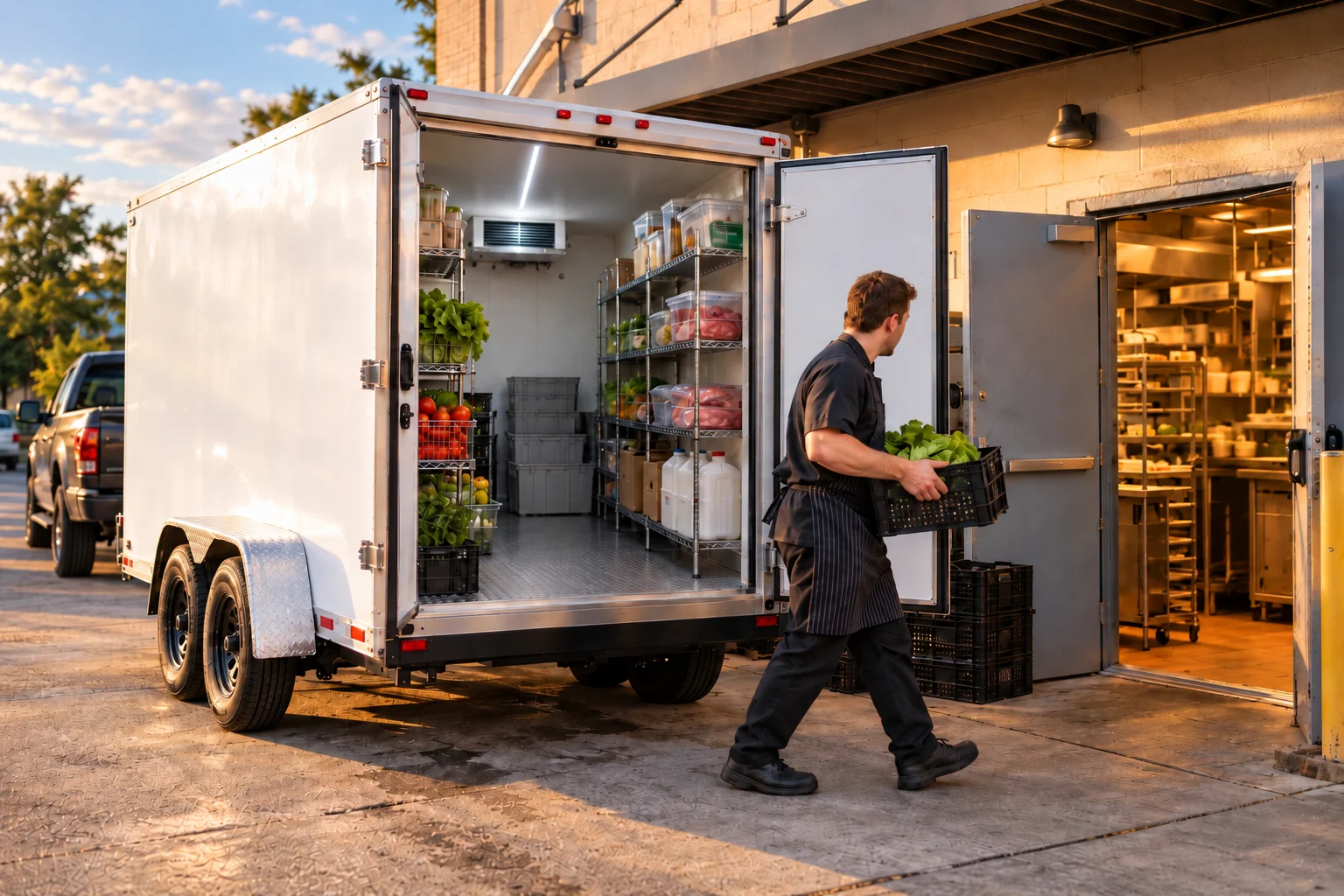
Who rents a walk‑in cooler on wheels?
A look at a small, unglamorous rental business: who calls, what they pay, what it costs to run, and where it gets hard.
It's 5 p.m. on Christmas Eve when the walk-in cooler at an Orlando restaurant dies.
Thousands of dollars of meat and produce start warming up. The repair tech can't come for days. The owner finds the closest refrigerated trailer for rent in Jacksonville, three hours away, and pays for it anyway.
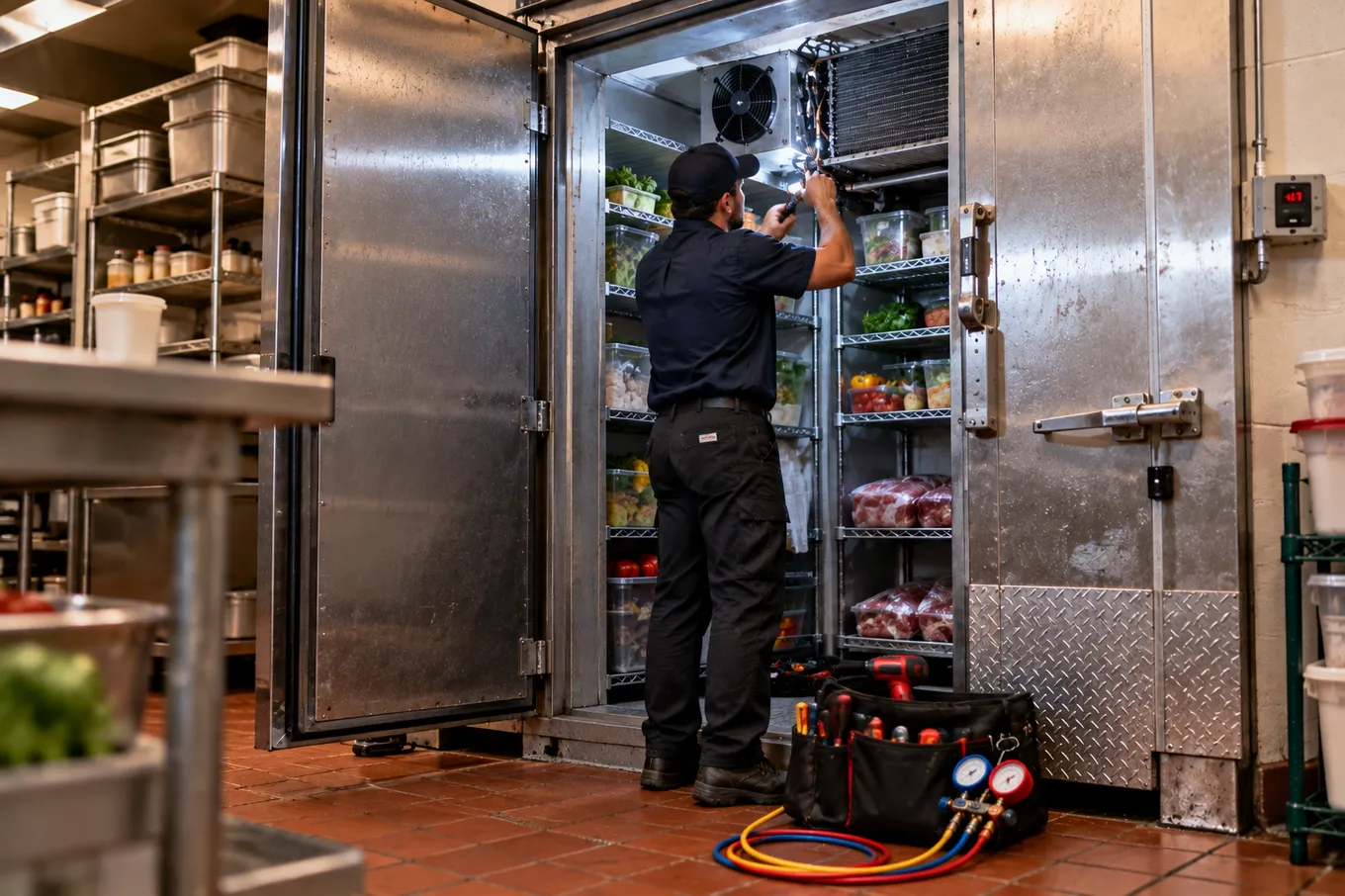
Four days later the bill is $3,500: the rental, the drive both ways, and a $500 rush fee. Would he do it again? "I would've lost more in food."
On the other end of that call was someone who hitched up a trailer and drove three hours on Christmas Eve. That's the whole business: a cold box, delivered fast, to someone who can't wait.
One trailer, then ten
In a video that went viral, one operator explained how he got into it. He worked for a restaurant owner who kept throwing out meat every time a cooler broke, so the owner bought a backup trailer. It sat empty most of the time, which gave him the idea: why should every restaurant own one when they could rent one?
He bought his own for about $7,000 and kept his day job. Each trailer helped pay for the next. He says he quit at five, now runs ten, and is booked out six months ahead, mostly through a Facebook Marketplace listing.
That's one operator's own account, not a typical result, and we haven't verified it. Most people start with one trailer, which is what the calculator above and the guide are built around.
How the money works
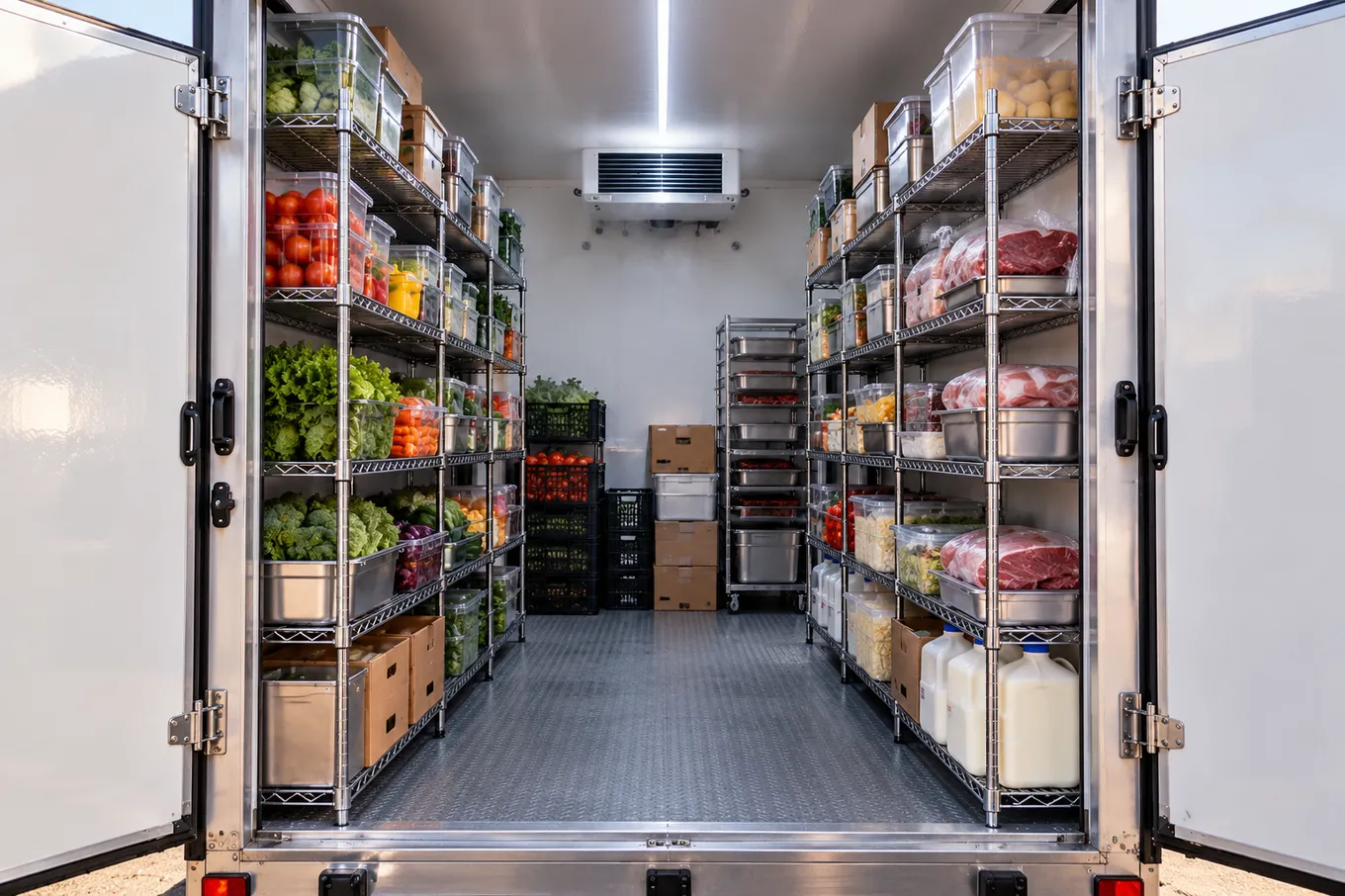
The trailer is an insulated box with a refrigeration unit, basically a walk-in cooler on wheels. It gets delivered, plugs into a wall outlet or a generator, and gets picked up when the rental ends. Like any rental business, it runs on one formula: daily rate × days rented
The cost side is mostly fixed. A new trailer financed at about $425 a month, plus about $95 of insurance, comes to roughly $520 a month. At $200 a day, about three rental days cover that. The calculator at the top of this page does the same math with your own numbers.
Rentals also tend to run for days, not hours. Three-day minimums are common, weddings book the whole weekend, and a restaurant remodel can keep a trailer out for weeks. Monthly rates run around $2,400 to $4,500.
Who calls
Restaurants are the steadiest renters, usually because a walk-in failed or a remodel is coming. When food is spoiling, price matters less than speed, which is why emergency and after-hours fees of $150 to $500 are normal.
Around them is a long tail of seasonal demand: caterers, weddings, festivals, hunters and deer processors in the fall, florists before Valentine's Day, grocery stores when the power goes out. When one season slows, another tends to pick up.
A lot of the work comes through refrigeration repair techs. They're standing next to every broken cooler in town, and the one question every owner asks them is "what do I do with my food?"
What renters care about
The same handful of questions come up on almost every call. Operators who answer them well tend to be the ones a restaurant saves in its phone.
- "Can you get here tonight?"
- Many operators keep office hours and call back tomorrow. The ones who answer late, quote by text and publish a rush fee get the emergency calls.
- "Will it actually hold temperature?"
- Good operators pre-cool before every delivery, and some add a sensor that texts the renter live readings. The food safety line is 41°F or below.
- "What if it fails with my food inside?"
- A lot of rentals run on a handshake. A clear spoilage clause and a written backup plan protect both sides.
- "Will it pass a health inspection?"
- Cleaning and sanitizing after every rental, with a log the renter can show an inspector.
- "Do I even have power for it?"
- Worth asking before quoting, not on delivery day. Some operators rent a generator as an add-on.
- "What's this going to cost me?"
- Surprise delivery and cleaning fees lose repeat business. Clear daily, weekend, weekly and monthly prices keep it.
What experienced operators do differently
- They know the repair techs before they buy. A small referral fee per rental makes them the first call.
- They publish prices. A restaurant in a panic calls the business that already lists a number.
- They price emergencies and events differently. Weekend packages for weddings; a rush fee plus a weekly rate for restaurants.
- They offer a monthly rate for remodels. One remodel can equal a month of event bookings, with one delivery and one pickup.
- They protect the trailer. A coupler lock and a GPS tracker are cheap insurance on an asset worth thousands.
The hard parts
It's a simple business, not an easy one. The things that trip people up:
- It isn't passive. Someone has to deliver, pick up and clean every rental, and emergency calls come at night and on holidays. That's also why they pay more.
- The payment doesn't take a month off. A financed trailer costs the same whether it's rented or sitting in the driveway, and bookings follow the seasons.
- Equipment fails. A refrigeration unit quitting with someone's food inside is the scenario every operator plans around.
- Local rules vary. Where you can park it, what insurance you need, and whether you collect sales tax depend on your city and state.
None of these are dealbreakers. They're mostly the difference between operators who quit after a year and the ones who keep adding trailers.
Common questions
Do you need $25,000 to start?
Most people don't pay cash. Dealer financing can start with little down, used trailers cost less, and building your own cooler trailer runs roughly $6,000 to $13,000.
Does credit matter?
For financing, yes, though lenders work across credit ranges, and the build-it-yourself route needs far less borrowing.
Do you need to know refrigeration?
Not really. You rent the units, you don't repair them. They plug in and run, and most operators have a repair tech they call for breakdowns.
Can it be a side business?
The operator in the video kept his day job until he had five trailers. Most rentals are booked ahead, and the after-hours calls are the ones that pay extra.
What if nobody rents it?
That's the real risk. Operators who start well usually talk to repair techs and restaurant owners before they buy, so the trailer has work waiting.
Do you need a truck?
A typical 6×12 trailer can be towed by many pickups and some SUVs. Check your vehicle's tow rating first.
Is there room in your city?
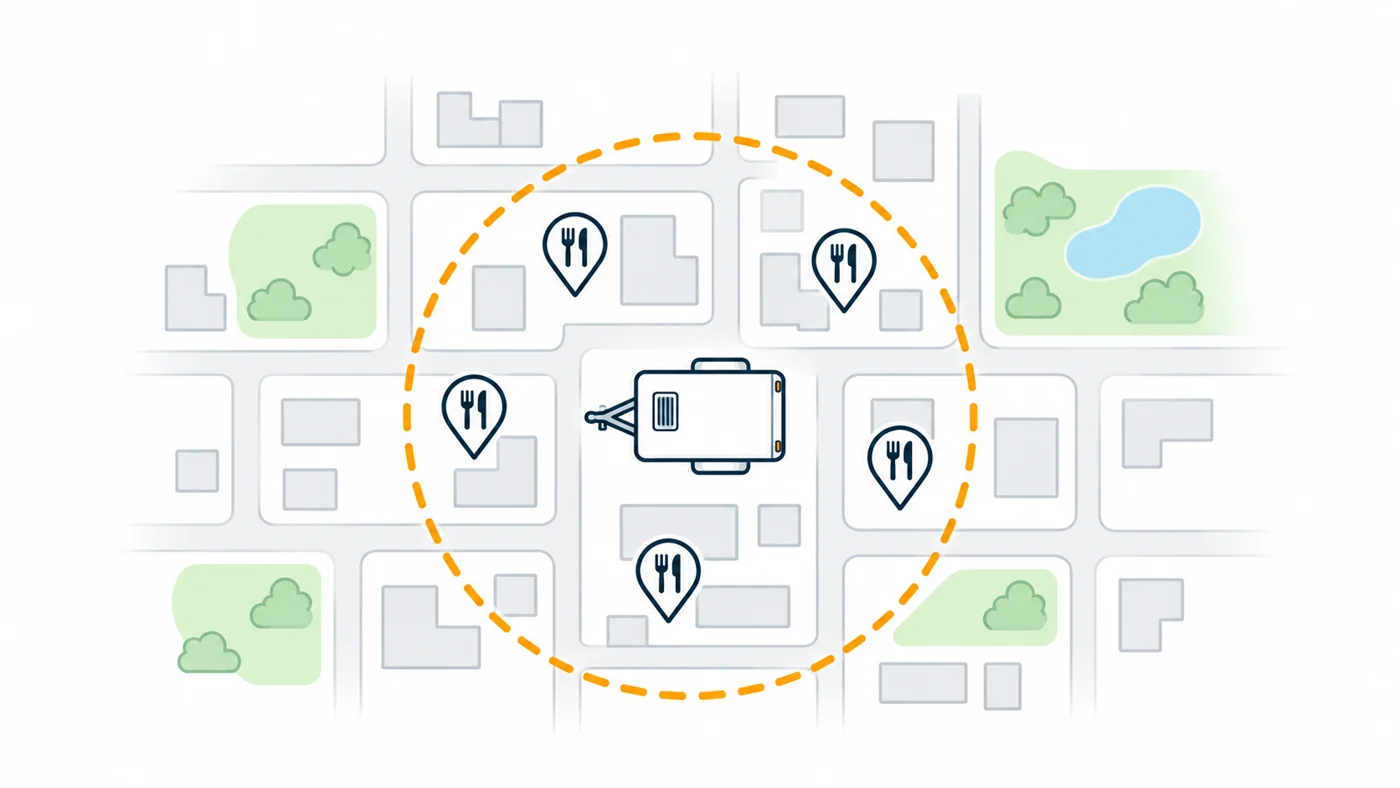
A rough read takes about ten minutes:
- Count restaurants within about 25 miles on Google Maps. Hundreds is a good sign.
- Count commercial refrigeration repair companies. Each one sees broken coolers every week.
- Search "refrigerated trailer rental" plus your city, call the nearest one, and see how far away they are and how fast they answer.
If the nearest trailer is an hour away, or nobody picks up, that tells you something. The calculator above covers the other half: what the numbers look like at your rates.
This article comes from Cold Trailer Playbook, a step-by-step guide to starting this business with one trailer. If you want to dig deeper, start with Step 1.